The Age-Old Spectrum: Balancing Utility and Defense in Your EDC Flashlight
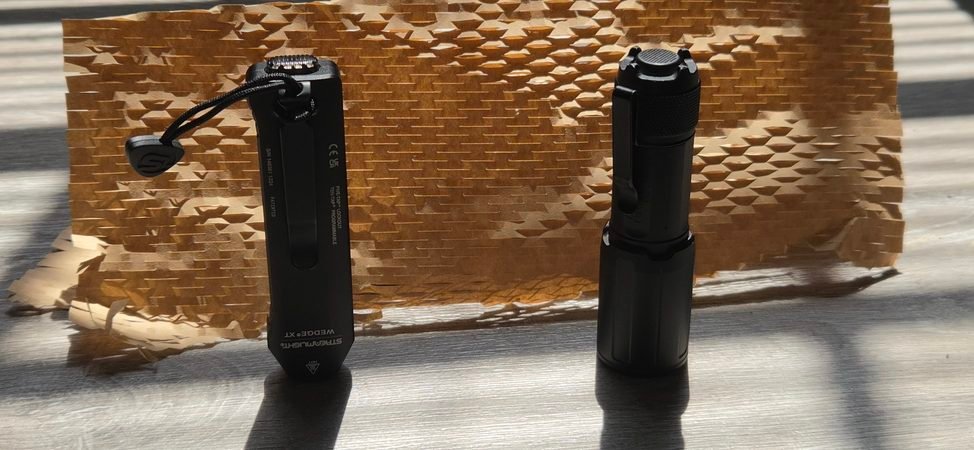
Tactical flashlights pose a common dilemma. Will a beam blind an attacker temporarily? For the purpose of this piece, I consider 500 lumen the absolute baseline for self-defense. That said, a dedicated tactical light brings utility features that might actually work against you if your sole focus is an offensive tool. Additionally, I’ll weigh the pros and cons of two very different sides of the spectrum. On the one hand, the Streamlight XLT is a 50/500-lumen slimline light built for easy carry. By contrast, the SIG Foxtrot-EDC Compact delivers a blistering 1,350 lumens continuously, with no low-power setting, a rugged pocket clip, and a sturdy metal housing built for durability.
Understanding the Science: Lumens vs. Candela
Before diving into the hardware, it is crucial to understand the two metrics that define a tactical beam: lumen and candela. For example, to understand the difference, imagine a standard garden hose:
- Lumens measure total light volume. Think of lumen as the total volume of water flowing out of the hose. It is the raw quantity of light being pushed out by the LED emitter in all directions.
- Candela measures beam intensity (throw). Think of candela as placing a tight spray nozzle on the end of that hose. It measures how concentrated and focused that light volume is into a single, high-intensity hot-spot.
Because of this relationship, a light with fewer lumen can actually look much brighter and reach much farther than a high-lumen light if it is engineered with a tighter, higher-candela beam profile. Understanding this balance is the key to analyzing how these two tools handle real-world challenges.
Impact of Beam Angle on Candela (At Fixed 1,000 Lumens)
As the beam angle spreads wider, light intensity drops exponentially.
The Streamlight XLT: Balanced Versatility
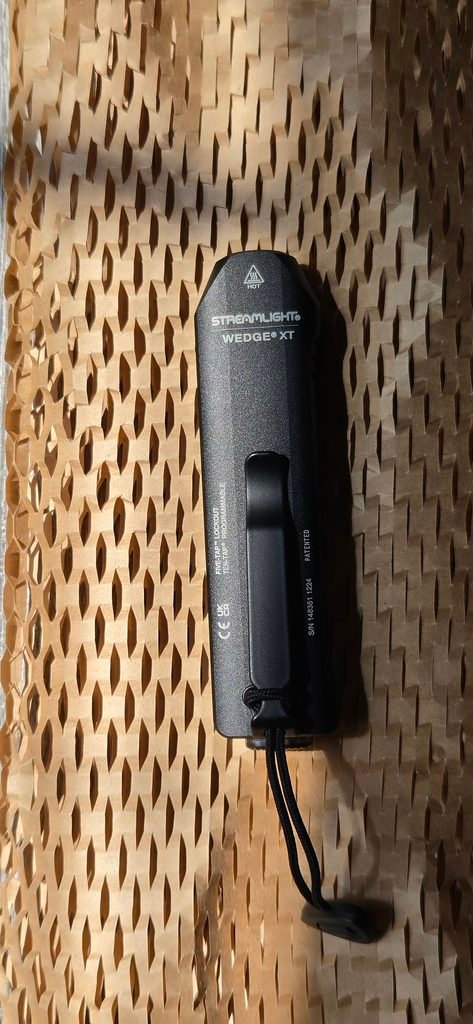
The Streamlight XLT masterfully bridges the gap between everyday utility and defensive capability. Its low 50-lumen setting allows you to navigate tight spaces or inspect objects without a blinding blast that destroys your administrative night vision. Yet, it preserves a 500-lumen high setting for moments requiring an offensive tool within a layered defense framework. While low output is ideal for standard administrative tasks, the ability to instantly command high output is non-negotiable when identifying an unknown threat in the dark.
Having carried this light daily for the past six months, I can attest that this balance is where the XLT truly excels. On a regular basis, the low setting handles all my routine tasks perfectly. When a detailed search demands more clarity, a quick tap gives me instant access to the full 500 lumen. While I haven’t had to deploy it in a defensive encounter, its performance over the last half-year gives me absolute confidence that it will deliver if called upon.
The SIG Foxtrot-EDC: Uncompromising Output
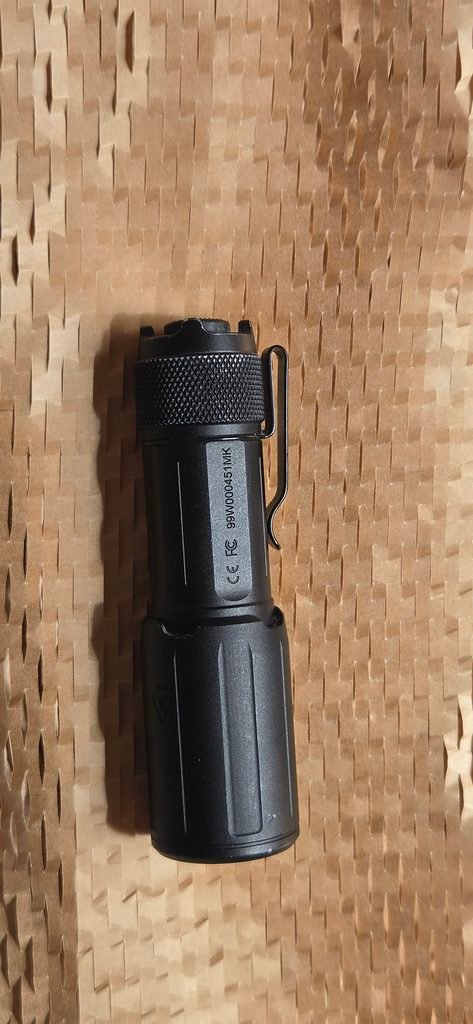
Moving to the opposite end of the spectrum brings us to the SIG Foxtrot-EDC. Pushing a blistering 1,350 lumen at the single press of a crisp, tactile button, this tool was engineered from the ground up to be a pure defensive lighting system.
The trade-off, of course, comes during administrative tasks. If you try to use it in tight spaces or low-light environments, it is full throttle all the time. You’ll need to give your administrative night vision a moment to recover after deploying a pocket sun for basic search tasks. But in a defensive scenario, that blinding output becomes a massive asset—flooding an unknown threat with overwhelming light and giving you a decisive advantage as you determine your next move.
Head-to-Head Comparison
| Feature | Streamlight XLT | SIG Foxtrot-EDC |
| Output Modes | Dual (50 / 500 Lumens) | Single (1,350 Lumens) |
| Peak Beam Intensity | 5,000 Candela (on High) | 33,000 Candela |
| Max Throw Distance | ~140 Meters | ~360 Meters |
| Beam Profile | Balanced, useful utility spill | Intense, tight spotlight built to punch through darkness |
| Administrative Tasks | Excellent (Low mode preserves night vision) | Harsh (Blinding in tight spaces) |
| Defensive Capability | Capable (Baseline defensive output) | Dominant (Overwhelming intensity and throw) |
| Carry Style | Slimline with pull lanyard | Rugged metal housing with pocket clip |
Conclusion: The Verdict
Ultimately, choosing between these two lights comes down to identifying your primary mission. If you want a balanced, realistic everyday carry tool that handles routine tasks without blinding you while retaining a solid defensive baseline, the Streamlight XLT is a proven, reliable partner. Its lower candela profile gives you a softer, broader flood of light that is perfect for scanning close-range environments without harsh reflection.
However, if you subscribe to a strict defensive methodology where your light is strictly an offensive tool to illuminate and dominate a threat, the SIG Foxtrot-EDC Compact offers unmatched, uncompromising power. Pushing a staggering 33,000 candela, its beam is tightly focused to maximize throw distance, allowing you to reach out past 350 meters or blindingly punch through photonic barriers like tinted windows and oncoming headlights. For me, the six months spent with the XLT proved that utility and defense can coexist—but if you want a pocket sun engineered for pure tactical dominance, SIG has built exactly what you need. I will let you be the judge the following was just my observations of my personal EDC methodology.
💡 Quick Formula & Rule of Thumb
Lumens (lm) measure the total volume of light leaving a source in every direction. Candela (cd) measures the focused intensity of that light pushed in one specific path.
Candela = Lumens / Solid Angle (Steradians)